Exhaling Data
PhD, Arts Technology & Emerging Communications — UT Dallas, 2026
My doctoral research, Exhaling Data: Promise and Perils of Wearable Technologies, asks a deceptively simple question: what actually happens to breath when a wearable device measures it? The answer, it turns out, is surprisingly complicated — and consequential for anyone building the next generation of body-worn technology.
Breath does not arrive in digital systems fully formed. It has to be abstracted, standardized, synchronized with device clocks, and fitted to metrics that make prediction possible.
Drawing on Science and Technology Studies (STS), medical humanities, HCI, and design research, the work traces respiration across four historical turns — from yogic and philosophical traditions, through Enlightenment measurement, into clinical diagnostics, and finally into the sensor-laden consumer devices we wear today. By holding these timelines together, I expose the layers of translation required before a single breath becomes a “readiness score” or a “stress alert” on your wrist.
The research is methodologically plural by design. I conducted eight months of embodied self-study with the Apple Watch and the Ultrahuman Ring, living with both devices through ordinary days and disrupted nights. I paired that first-person practice with discourse analysis — reading corporate white papers, device patents, and clinical literature side by side — to surface the assumptions about health, productivity, and bodily discipline that become quietly embedded in respiratory data infrastructures.
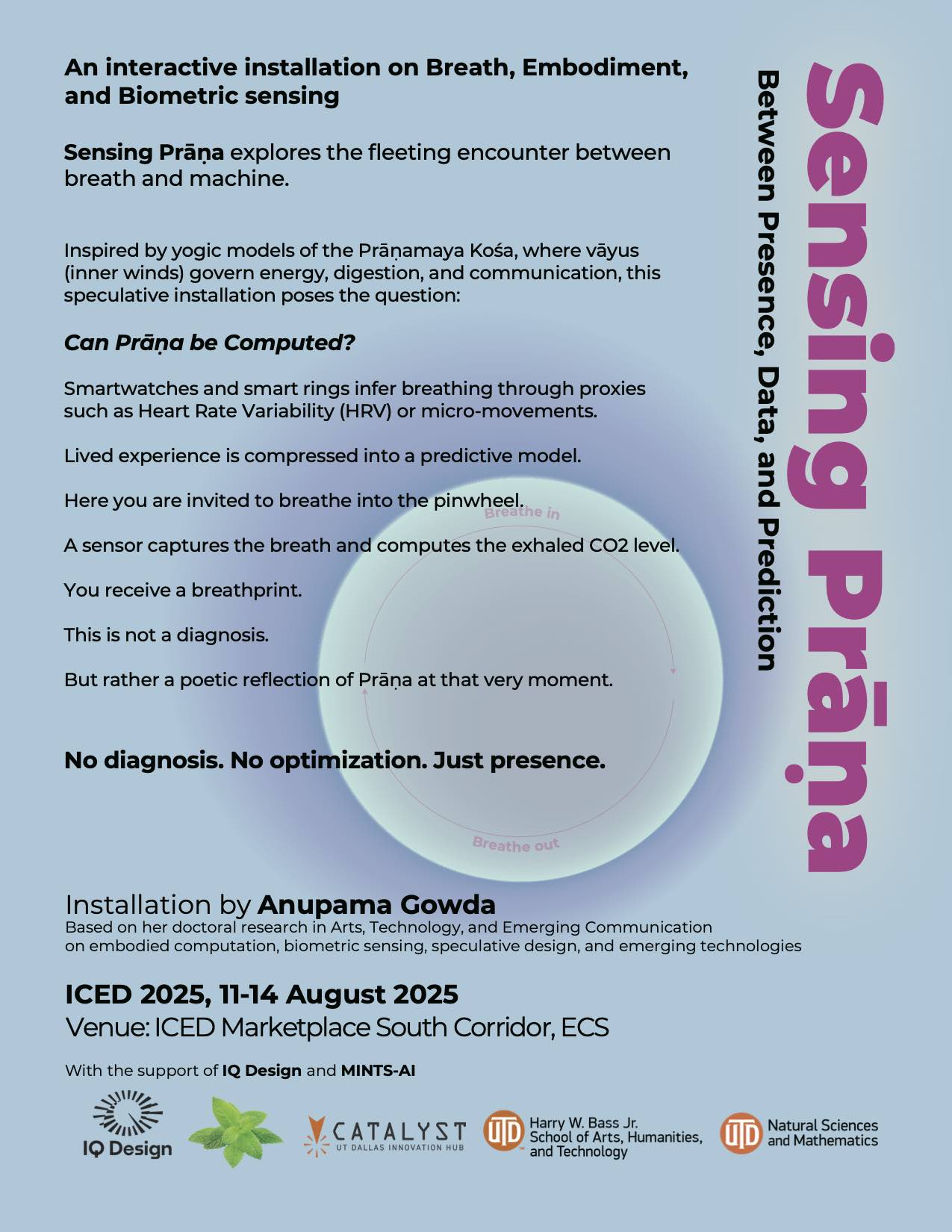
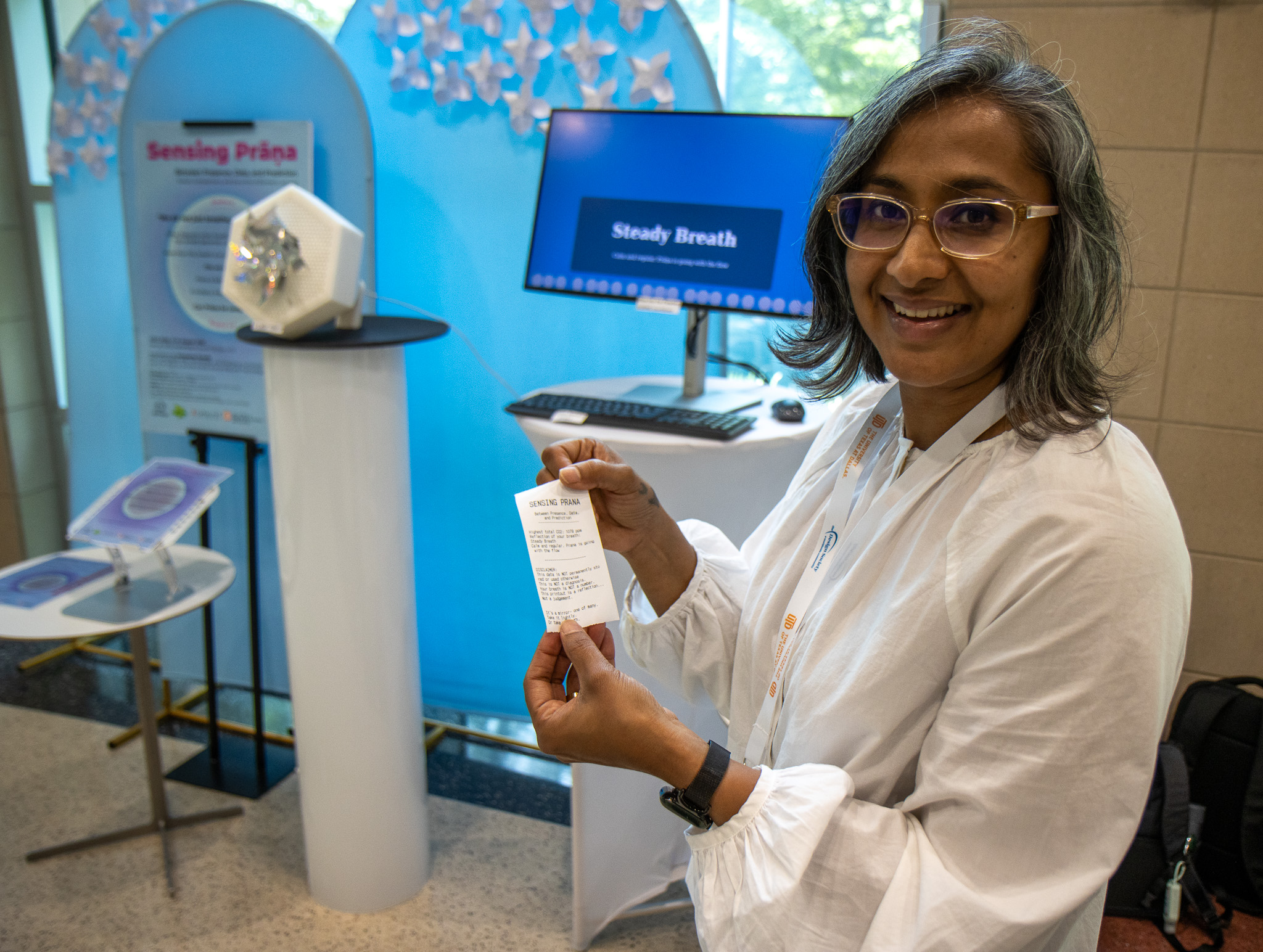
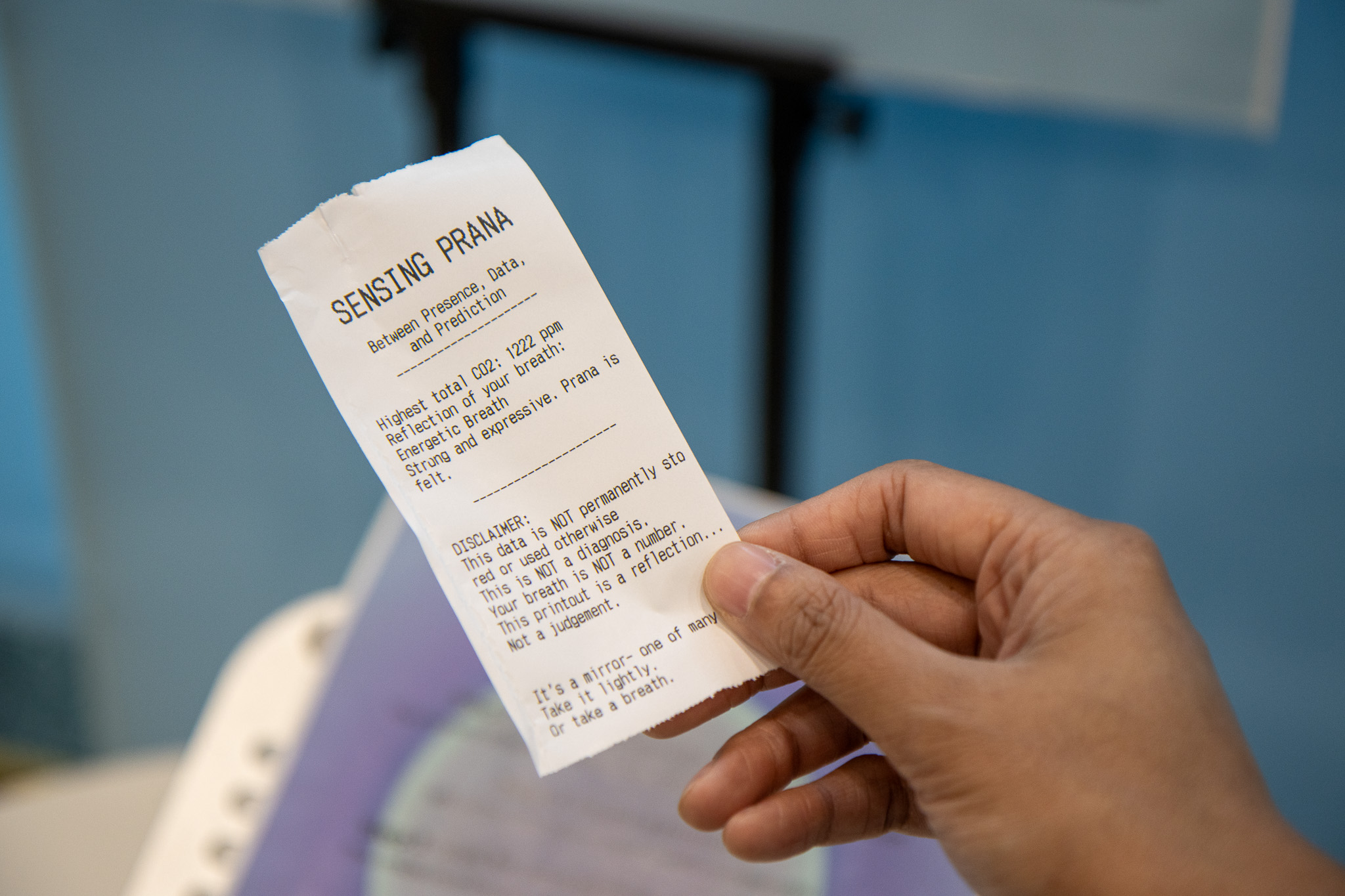
The third strand is speculative. Sensing Prāṇa, an interactive installation I designed and exhibited, offered visitors a “breathprint” — a visual trace generated by their own breathing, shown without a score, without a benchmark, without a recommendation. Drawing on yogic understandings of prāṇa as a relational force rather than a physiological variable, the piece asked what it might feel like to sense the body on its own terms. The response was telling: people lingered, surprised to find a wearable encounter that did not immediately rank them.
The central argument is that the frictions between lived breathing and its computational representation are not engineering problems waiting to be fixed. They are structural. Computation requires stabilization, discretization, and comparison. Biological rhythm, affect, environment, and embodied habit do not always comply. Recognizing this does not argue against wearables — it argues for building them with greater epistemic humility.
For the wearables industry, this matters practically. Products that treat the gap between data and experience as merely a calibration issue will continue to produce moments of ontological friction: the stress alert that fires mid-meditation, the recovery score that contradicts how the body actually feels. My research offers a framework — and a design sensibility — for building systems that hold that gap in view rather than papering over it.
I bring to this work a background that spans cultural production, technology education, and community design across India and the United States. I am fluent in qualitative and critical methods, practiced in speculative and participatory design, and committed to the idea that the most durable wearable technology will be the kind that earns the body’s trust over time.
#Wearable Technologies #Biometric Sensing #Embodied #HCI #Speculative Design #STS #Technocultural Studies #Ethics of Data #Medical Humanities #Respiratory Technology #Design Research

